Studio notes · 12 October 2026
Making a pig with wings
The mould makes a pig. The wings are the part nobody sold us.
Words by Jesse. The work is Alesha's.
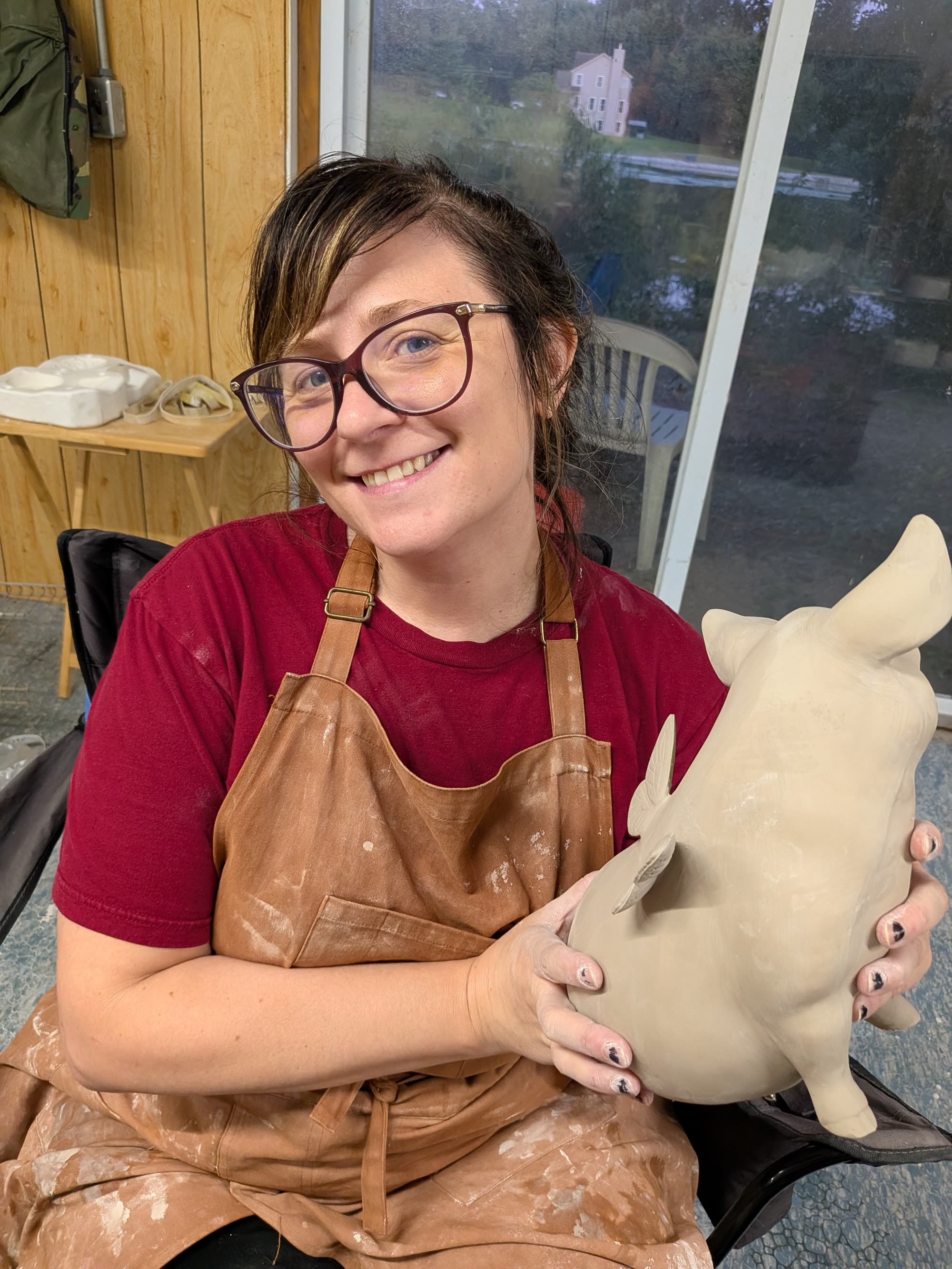
Wings are not part of any mould in this studio. They are rolled, cut, and fixed onto the cast body while the clay is still soft, which means the pig has to be handled at its most fragile moment: soft enough to take the new clay, soft enough to slump if you look at it wrongly.
Joining wet clay to wet clay is a forgiving trick, and joining wet clay to nearly-dry clay is not. The window where the body is dry enough to hold its shape and wet enough to bond is narrow, and the wings are heavy for their footprint. Getting both sides to sit symmetric without dragging the body out of true is most of the work.
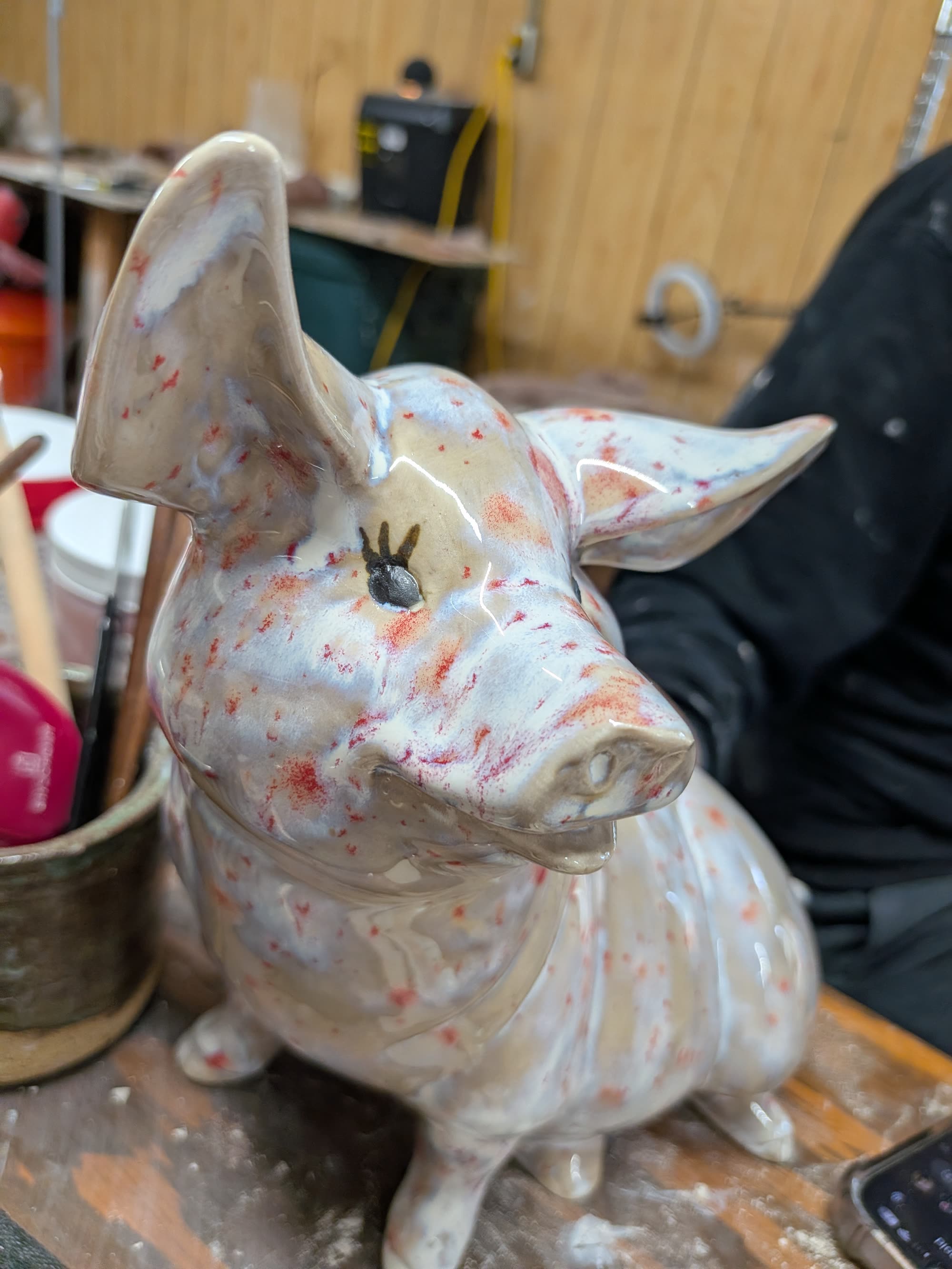
After the wings go on, the piece dries slowly. A form this thick with this much added material cannot be hurried, or the joints crack as the moisture leaves at different speeds. Then the first firing, and it comes out of the kiln as one piece instead of three, which is the moment you find out whether the joining held.
What we like about this pig is what it says about the rest of the work. The studio casts from moulds, and the moulds are honest tools. But every so often a piece needs to be something the mould never imagined, and that is when the studio stops being a casting shop and becomes what it actually is.
The winged pig is a one-off so far. If it becomes a run, the studio notes will say so.
See the pigs
- Ceramic pigs The full category page
- How a pig gets its personality Ears, eyes, and attitude
- How a piece is made The whole process