
Studio notes · 12 October 2026
How Alesha gives a ceramic pig its personality
The mould gives the studio a pig. What makes it a character happens afterwards, at the bench, with a tool and about ten decisions.
Words by Jesse. The work is Alesha's.
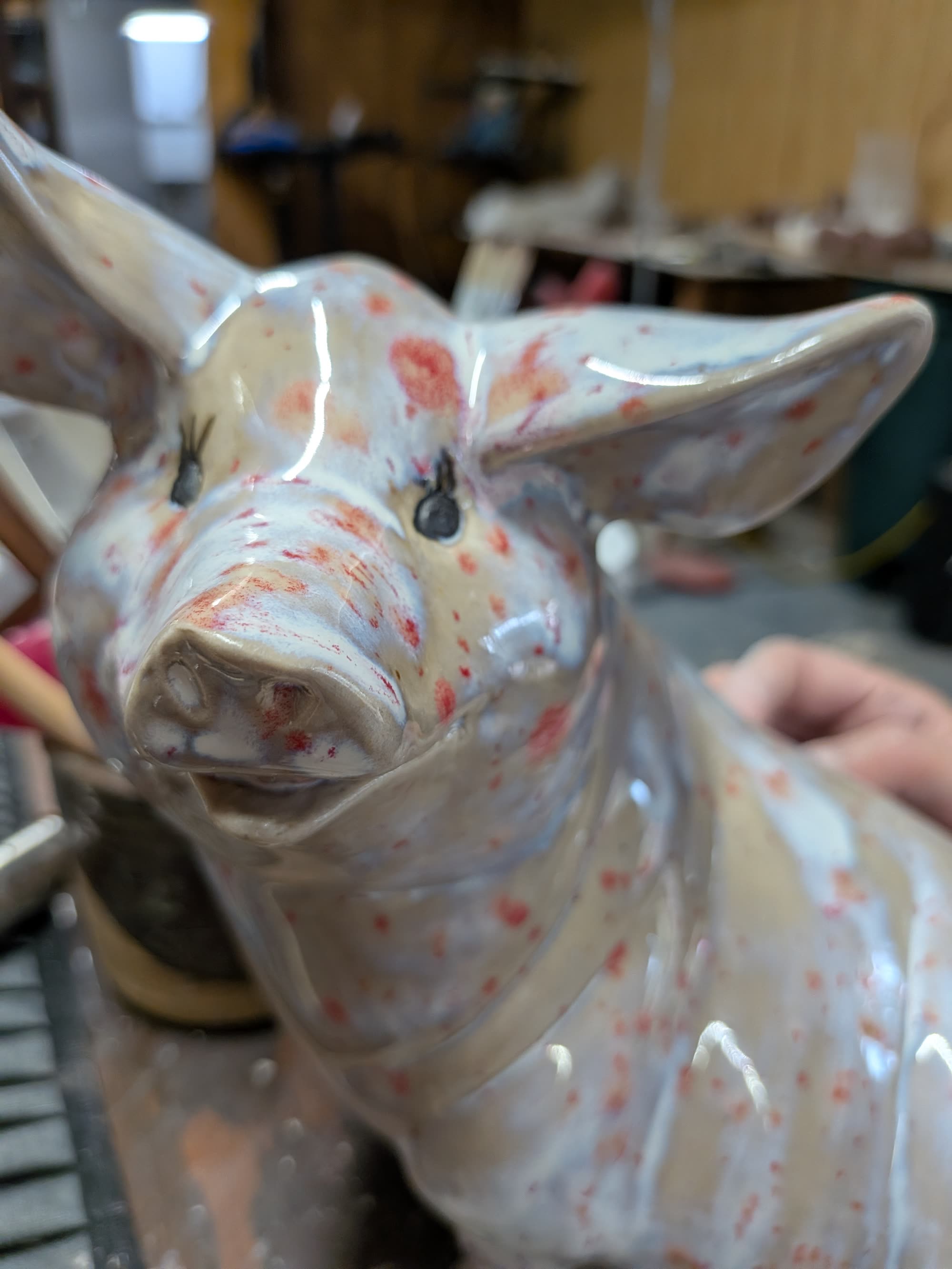
Every pig in the studio starts the same way: liquid slip into a plaster mould, the plaster drinking the water out of it, and a plain pink-grey pig where the mould used to be. At that moment the pig is nobody. It is an animal-shaped container waiting for an opinion.
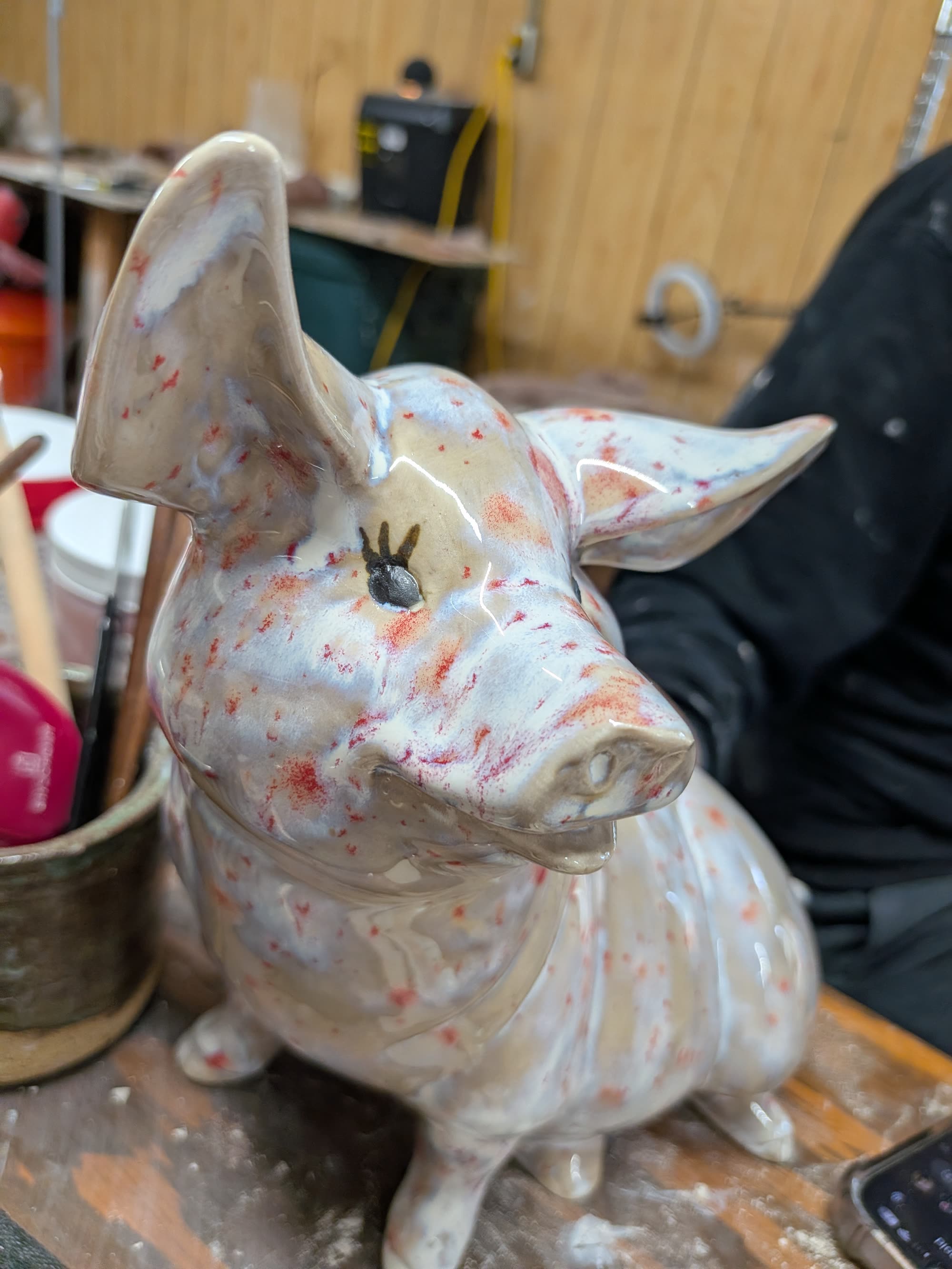
The first thing Alesha reaches for is the ears. Upright and wide gives a pig that is listening. Folded gives one that has decided the day is too much. Nothing about the mould requires either. It is a choice, made with thumbs, while the clay is still soft.
The face comes next, and it is smaller work than the ears but it carries more. A pressed brow turns a pig from a farm animal into a neighbour you have opinions about. The eyes are painted after the bisque firing, and a dot of dark glaze either side of the snout is what makes the expression land.
Then the surface. Some pigs get carved texture across the body, cut into the unfired clay one pass at a time. Some get spots. Some stay smooth and let the glaze do the talking. The same run of glaze will pool and streak differently on every piece in the kiln, so even two pigs from the same mould, glazed the same day, do not leave the studio looking like twins.
By the time a pig goes into its second firing, it has picked up a personality somewhere between the bench and the decisions. That is the part that cannot be cast. You can buy the mould. The suspicion is homemade.
See the pigs
- Ceramic pigs The full category page
- Making a pig with wings The boldest pig so far
- How a piece is made The whole process, start to kiln