
Goose Fire Ceramics · Staunton, Illinois
A little clay. A lot of character.
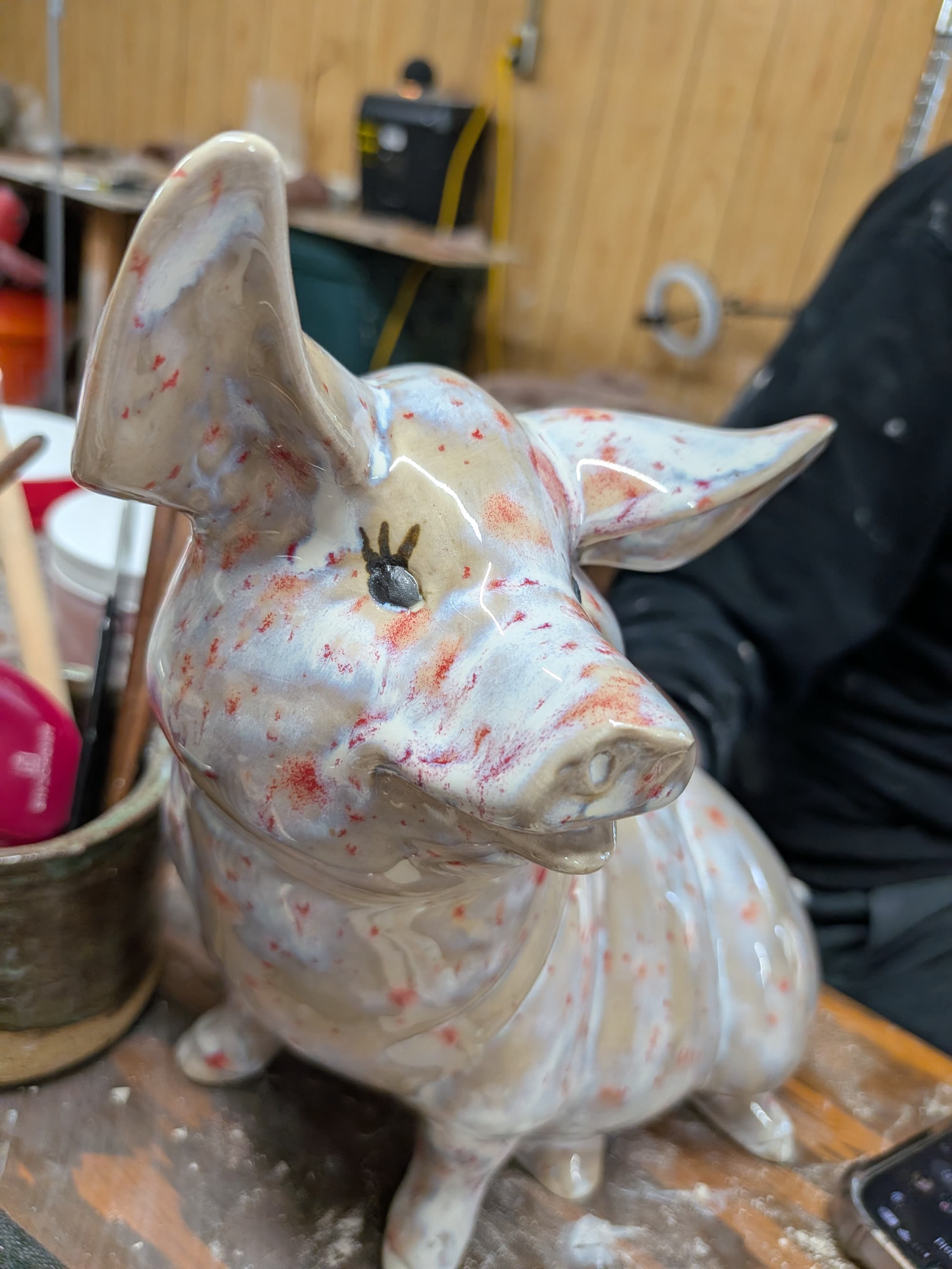
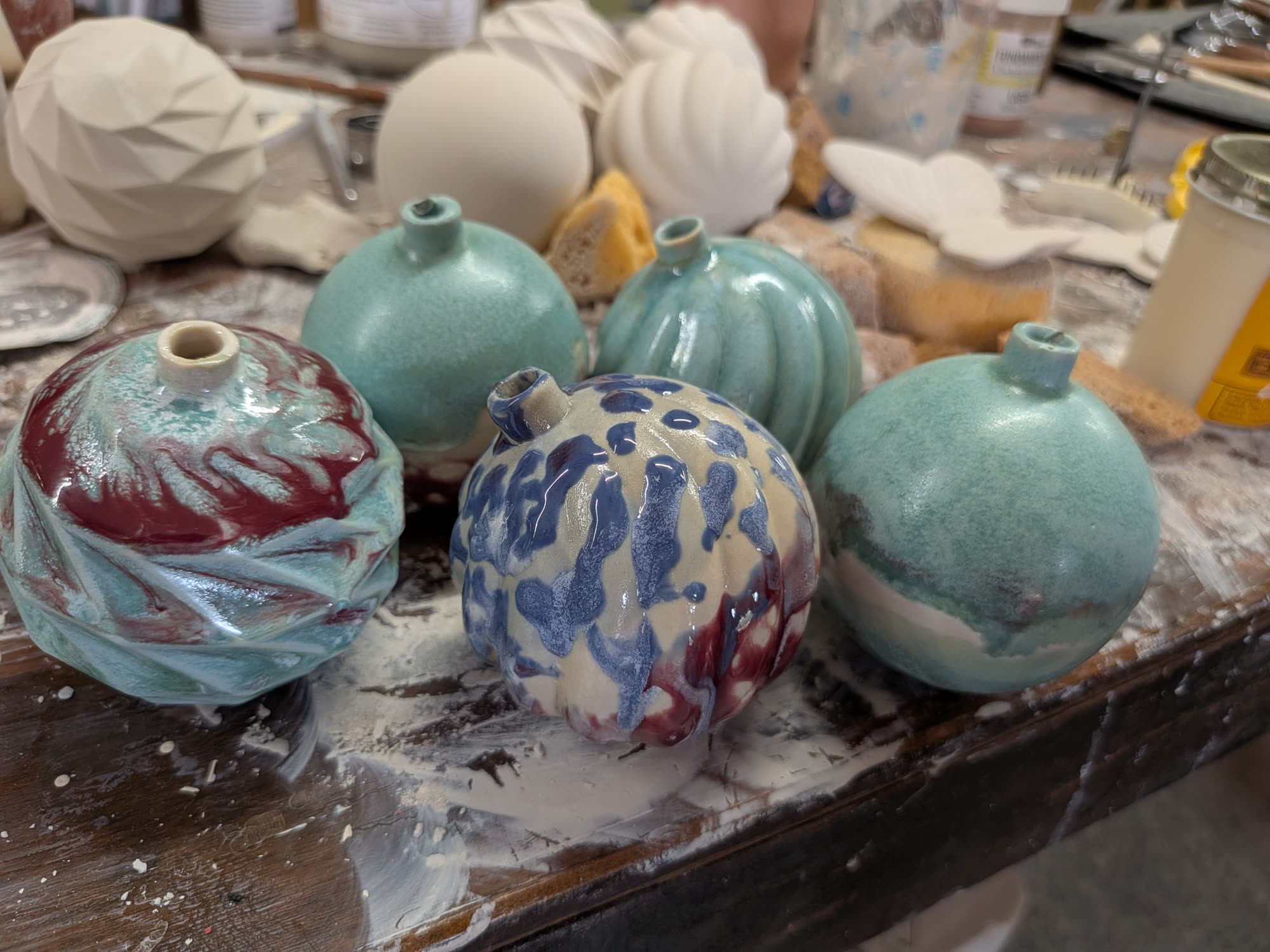
Alesha brings whimsical ceramic pigs and other forms to life. Jesse makes the ornaments. Planters are next.
Selected work
Pigs with personality, and the work around them
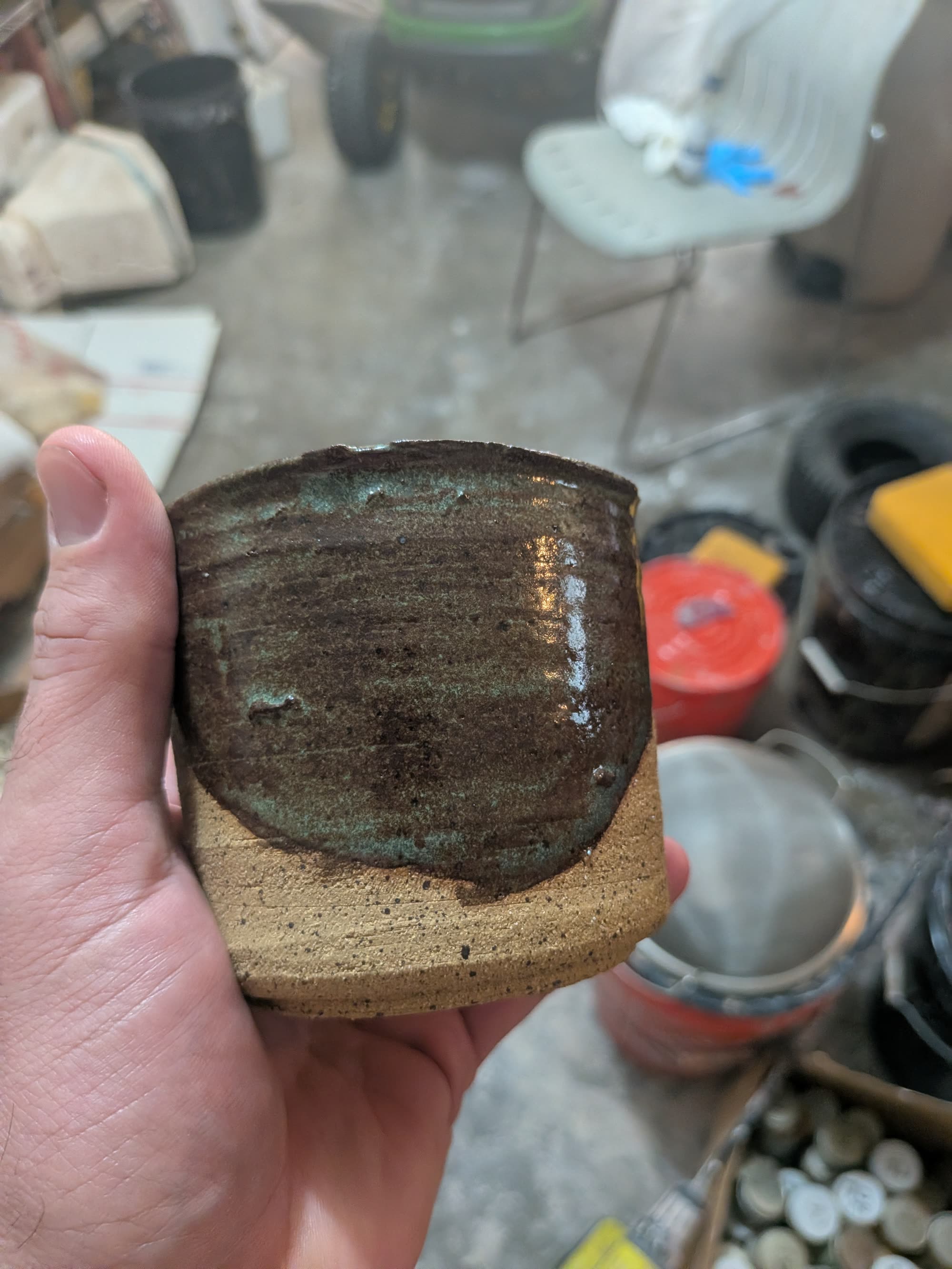
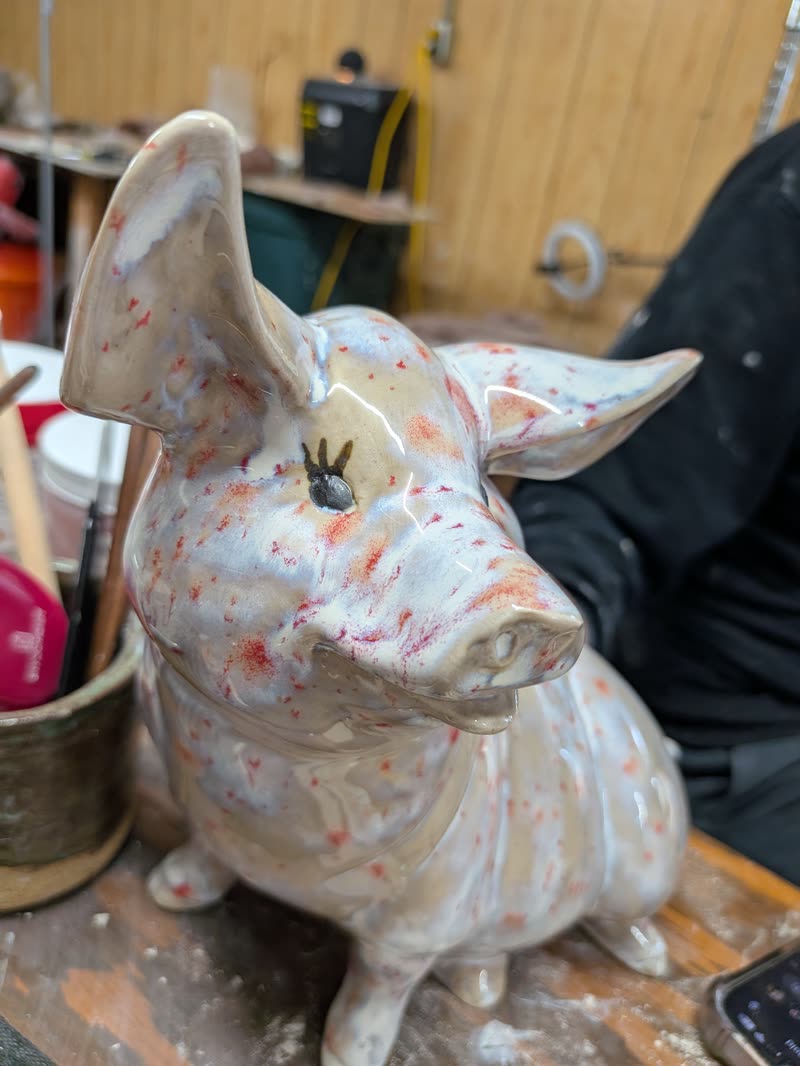
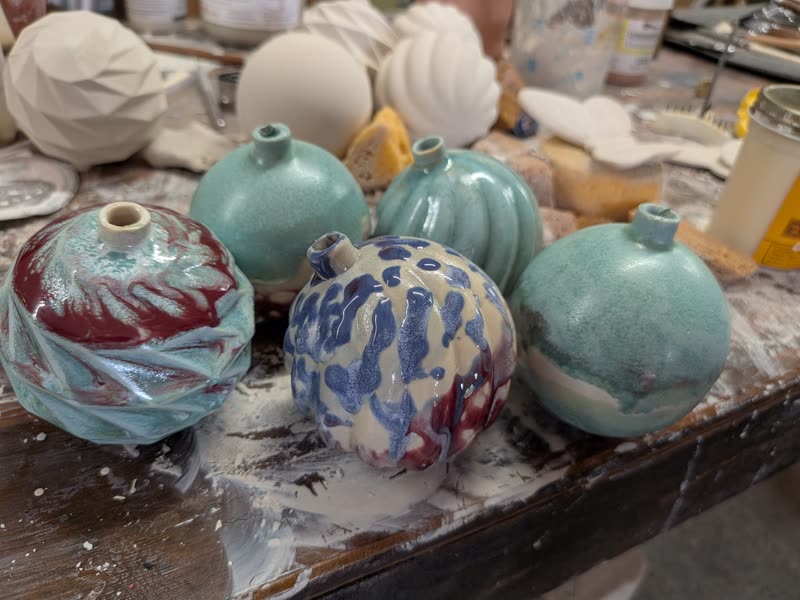
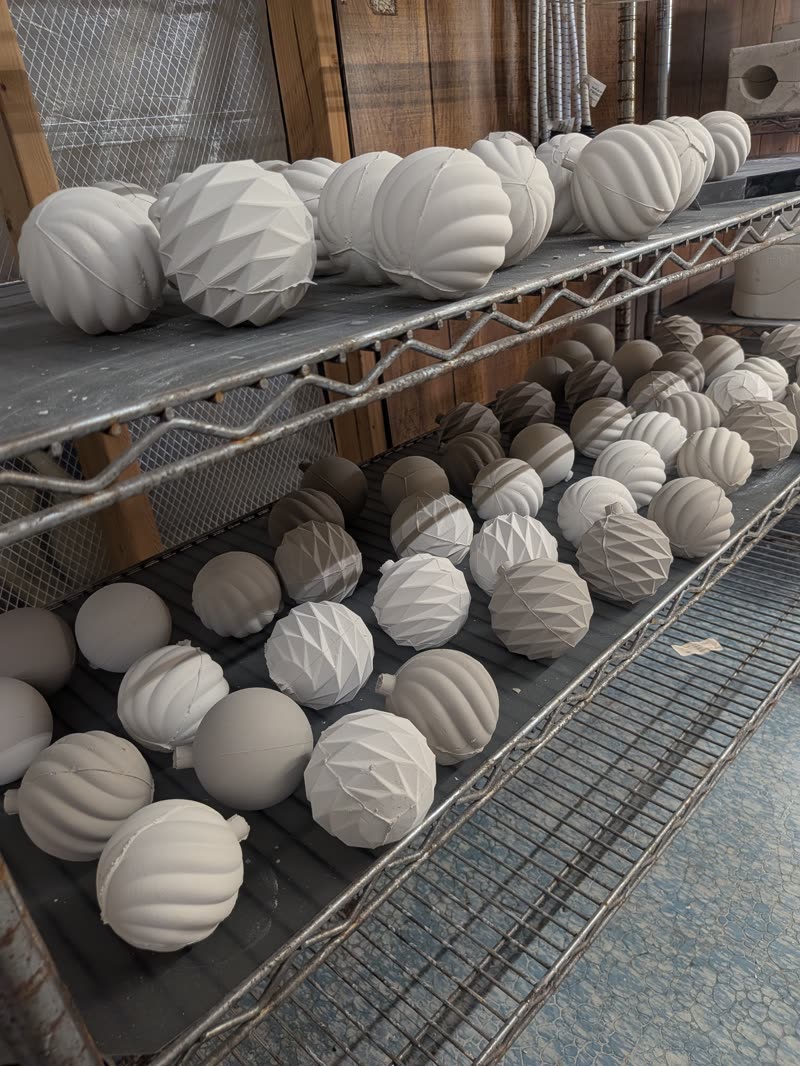
Alesha's whimsical ceramic pigs lead what we make. The same bench also turns out Jesse's handmade glazed Christmas ornaments, and one-off forms when a piece asks for it.
What we make
Three ways into the work
The artist
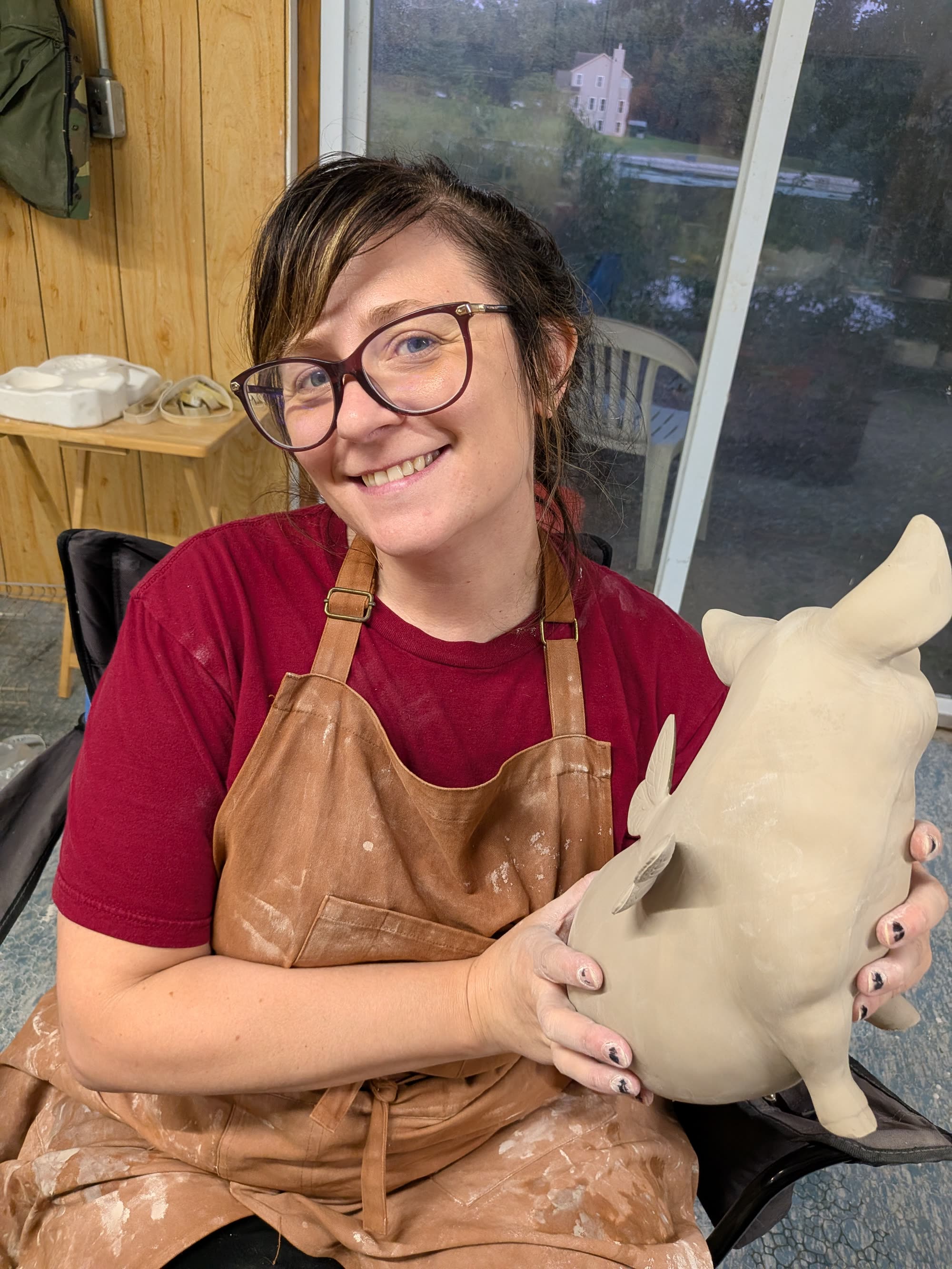
Alesha
She built this studio one piece at a time, mostly through Facebook Marketplace. The kiln cost a hundred dollars. The wheel was inexpensive. What she could not buy, she made.
She works an office job through the week and spends a great many hours in the studio around it, late nights included. She is endlessly on the hunt for slipcasting moulds, and she gives nearly every one of them her own spin.
Making this her full-time life is the dream. Every piece that comes out of the kiln is a step toward it.
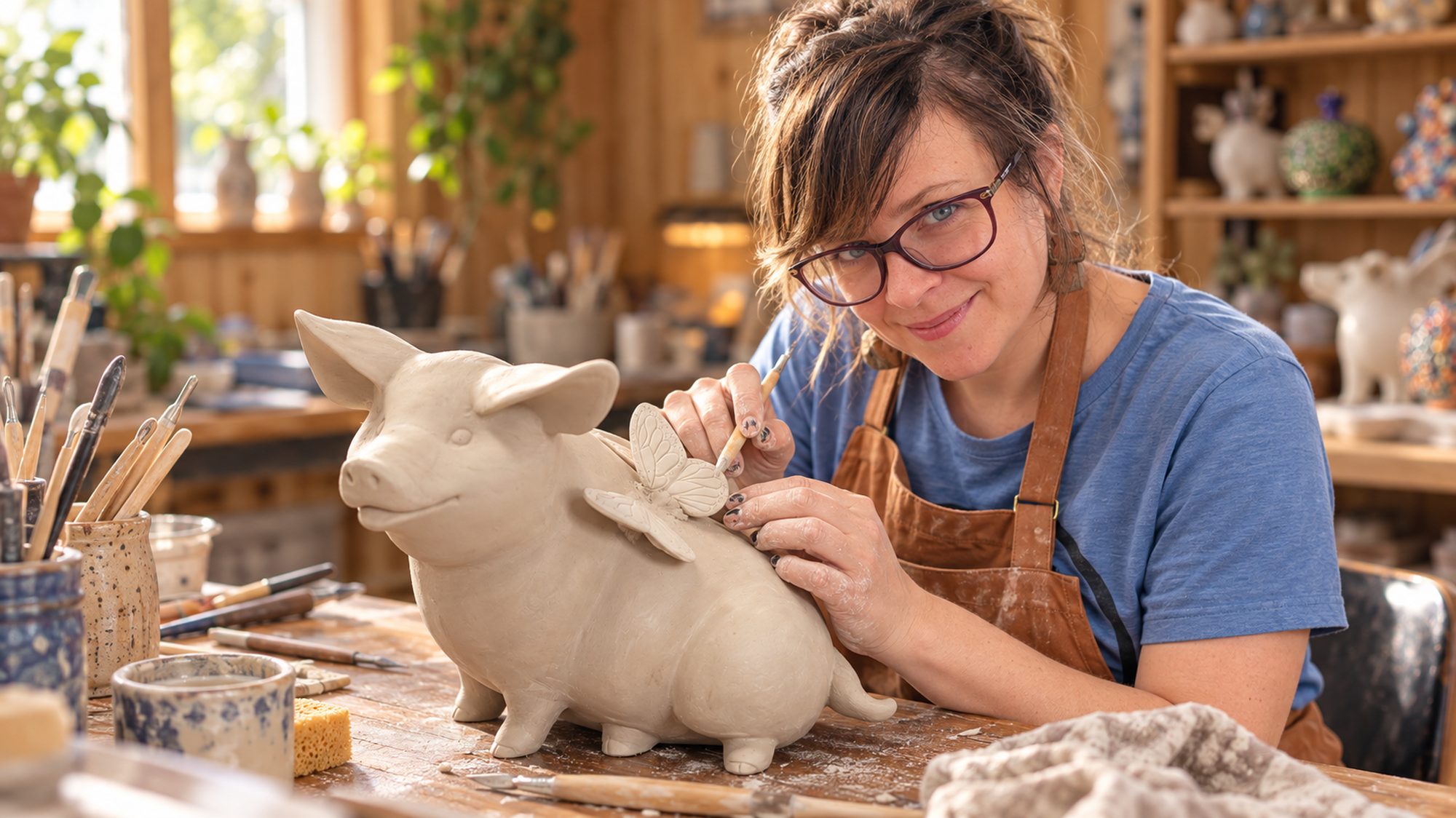
A moment of making
Twenty seconds at the bench
Alesha holds a leaf-textured goose up to the light and turns it, looking for the place the carving needs more work. Then the glaze, then two firings.
Character in clay
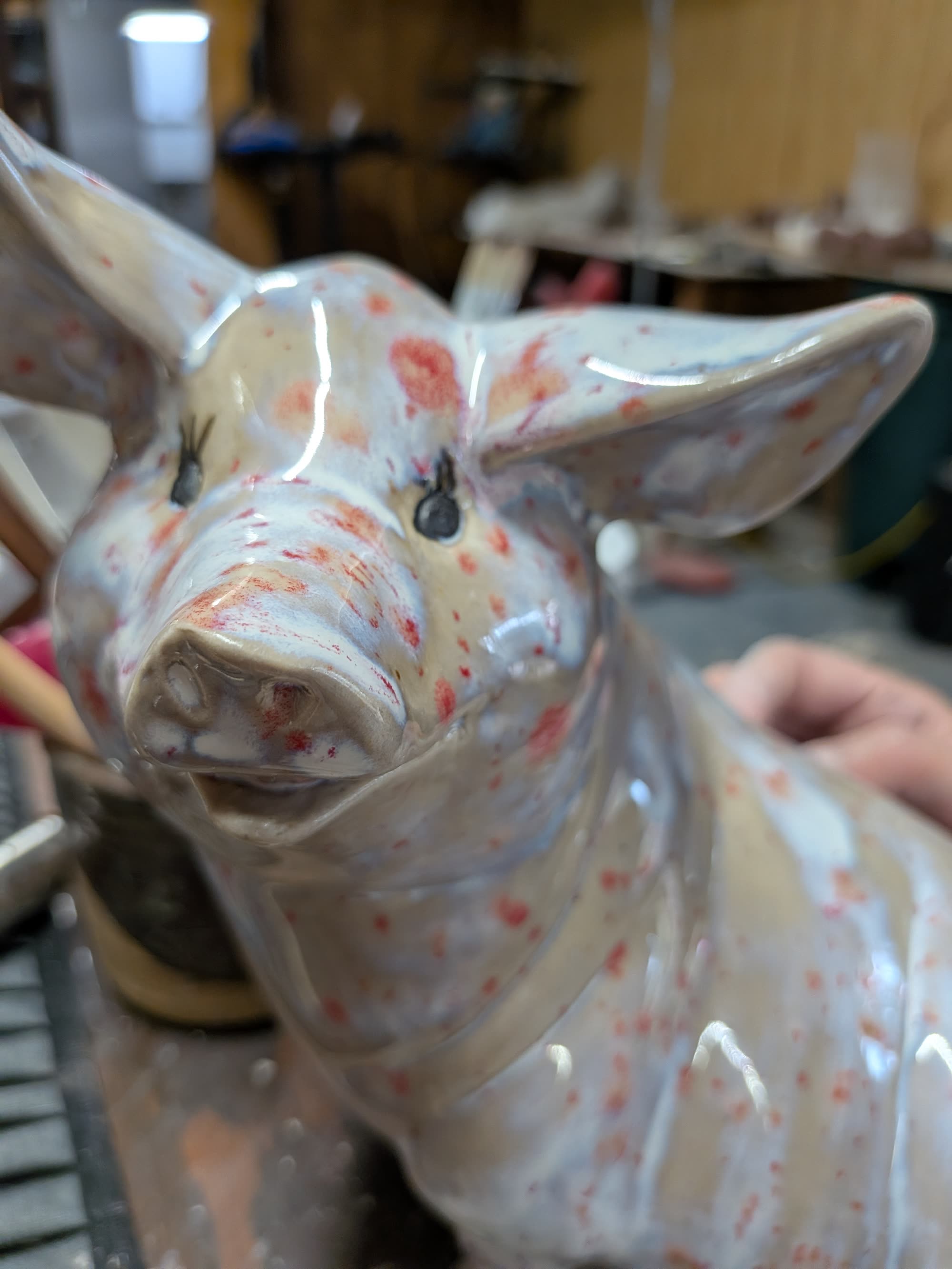
Give her a mould and she will give it an opinion
Every piece starts as a form somebody else made. What happens between the mould and the kiln is where it becomes something you won't find twice.
The winged pig is the most honest example: the mould gives a pig, and the bench adds wings, ears, and an expression nobody ordered.
The short version
How a piece comes to you
- The mould A form to start from. The plaster moulds are made here, in the studio.
- The bench Carved, spotted, given ears. Every piece gets her own spin.
- The kiln Dried slowly, fired, glazed by hand, fired again.
- Your home A piece nobody else will have, with the fingerprints to prove it.
Supporting the studio
Jesse
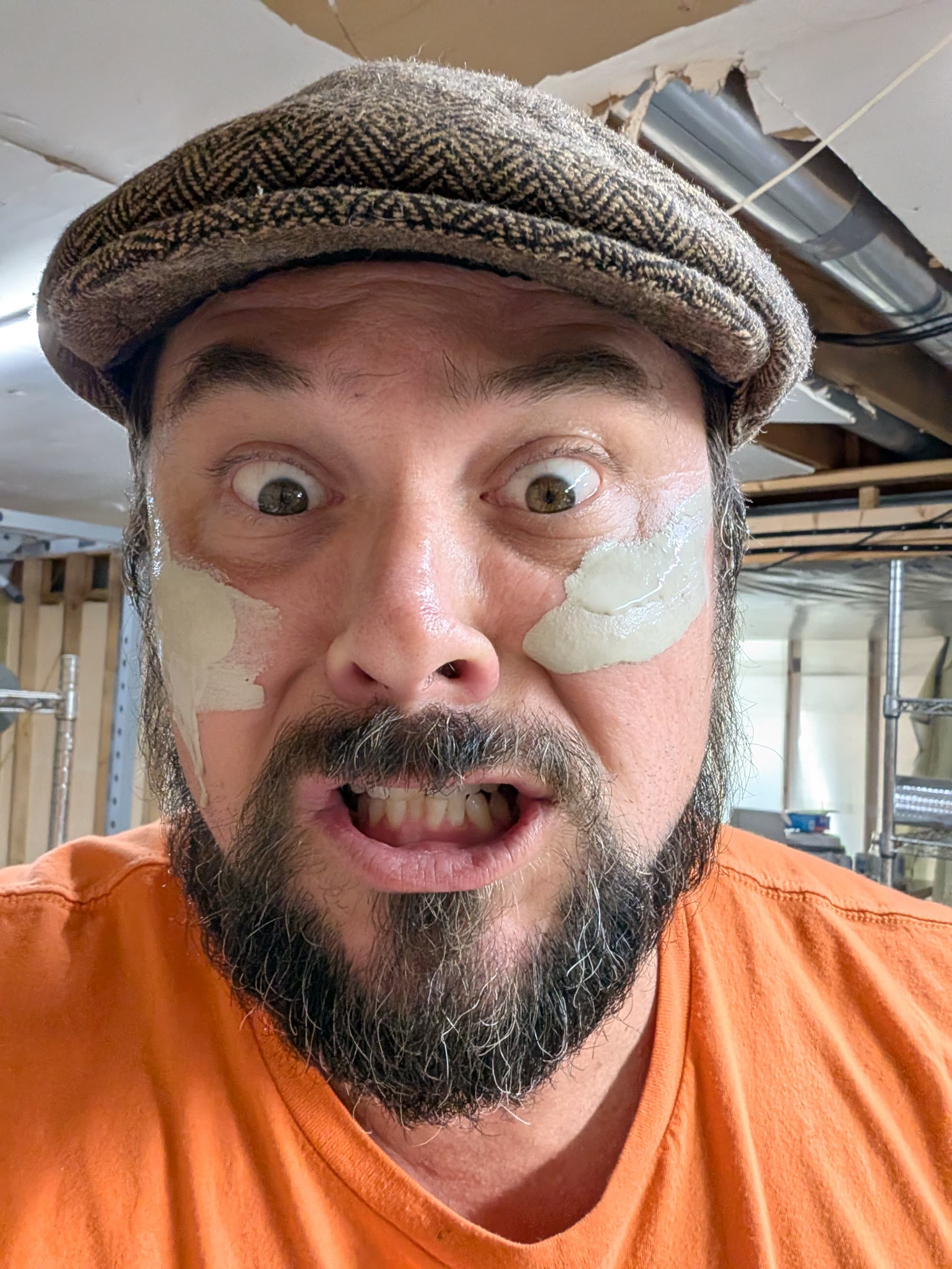
Jesse is Alesha’s partner. He helps keep the studio running, and he makes ceramic ornaments of his own, the kind that go on a Christmas tree.
Alesha makes the pottery and the slipcast work. Both of them work in clay.
FAQ
Questions people ask
Is every piece really one of a kind?
The moulds give the starting form, and everything after that is hand work. No two pieces come out of this studio identical.
Why does handmade ceramics cost more?
One person, many stages, and days between them. What you are paying for is the time — and the fact that a person was here.
Can I buy anything right now?
Not online yet. When sales open, they open here first.
Coming soon
The shelf is filling
Proper photographs of the first pieces are on their way. When there is something to show, it shows up here — photographed properly, before anything is ever for sale.
- Ceramic pigs Photographing soon
- Christmas ornaments Photographing soon
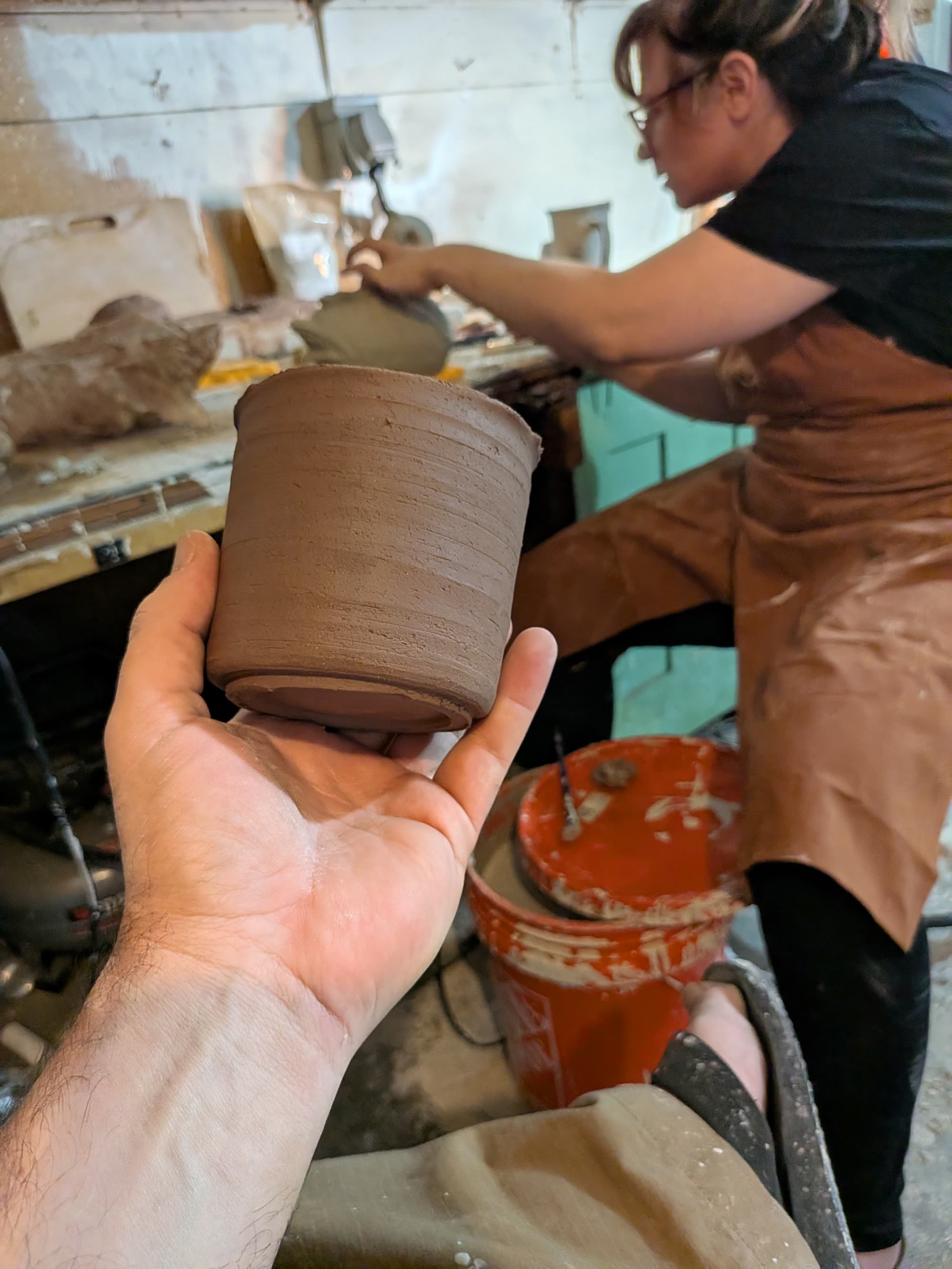
- Planters Still taking shape
Keep in touch
Follow what she makes next
Studio notes cover new pieces, firing days, and what is on the bench. The contact form reaches Alesha and Jesse directly.