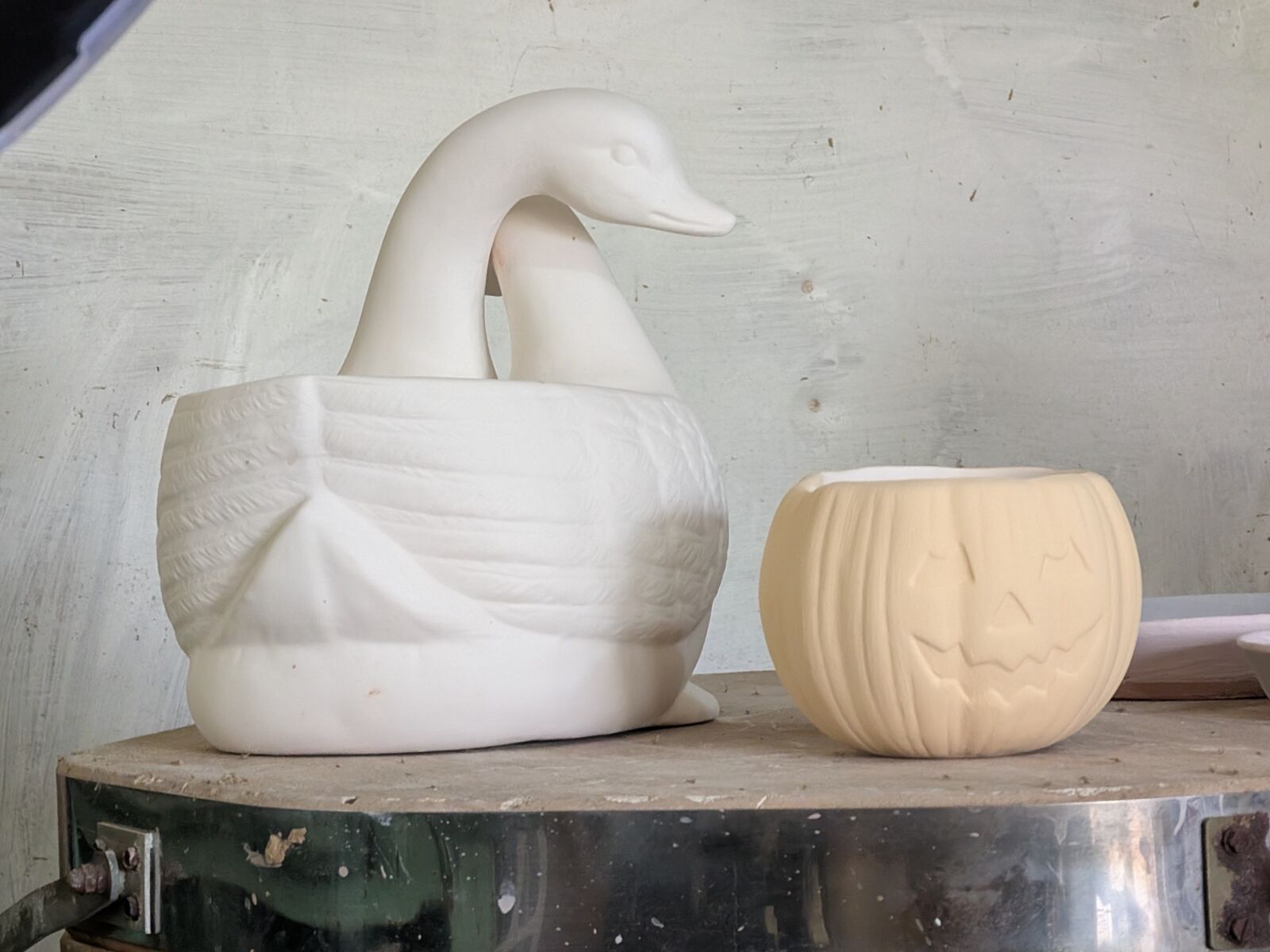
How a piece is made
From mould to glaze
The sequence an ornament actually goes through, photographed in the studio.
1. The mould
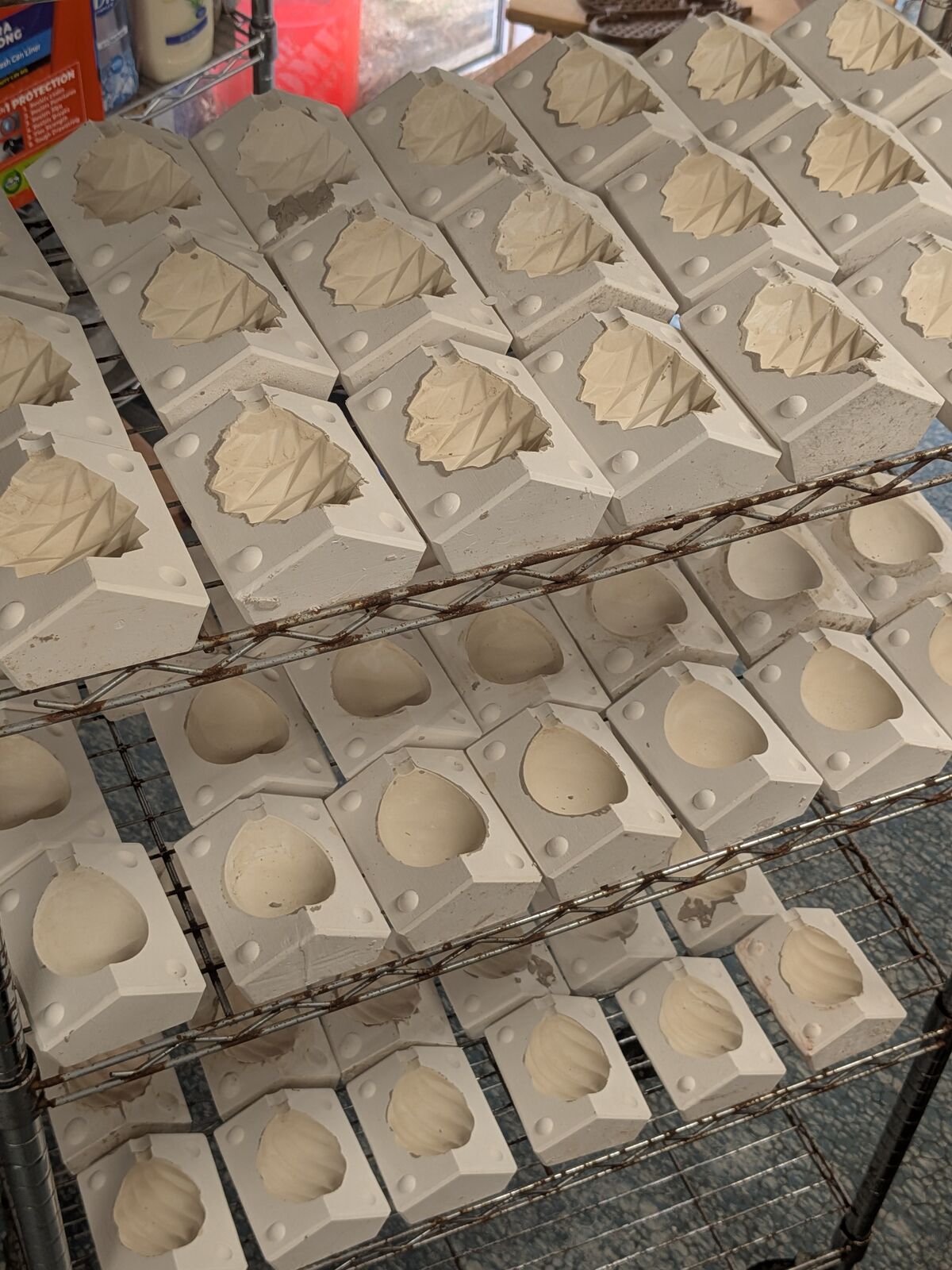
Some moulds here are made in the studio: plaster poured into a printed plastic form, left to set, then opened up and cleaned. Others are bought as castings. Either way the relief in them was carved or pressed by hand first.
The ornament designs come from Old Forge Creations. Not every mould in the studio came from them.
2. Casting and trimming
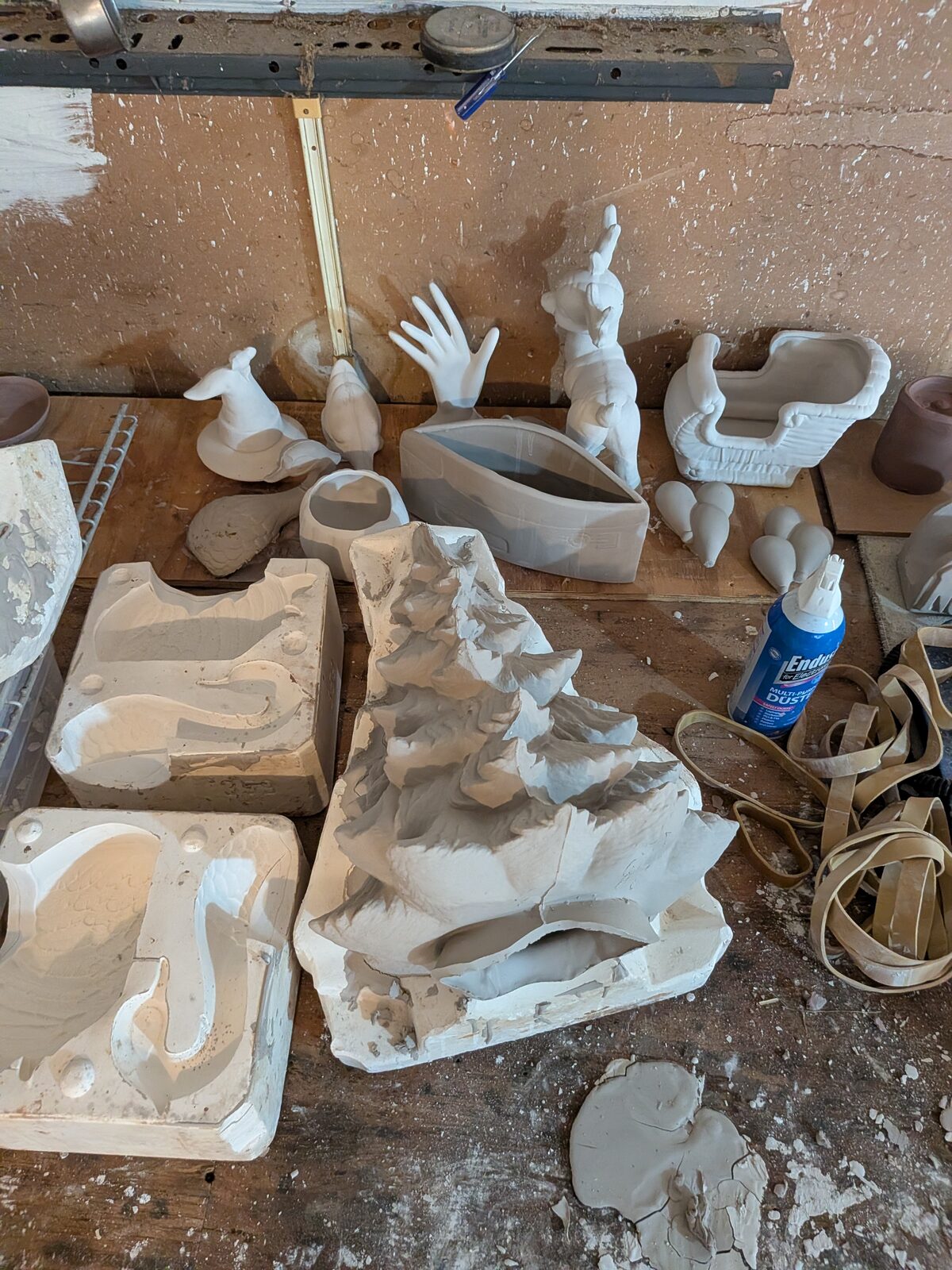
Liquid clay goes in, the mould is filled more than once as it shrinks, and the piece is left until enough has set to lift out without flexing. Once it is out, the seams are trimmed away and the joins cleaned up by hand.
This is the slowest part. It is also where a lot of the character ends up, because every piece comes out of the mould slightly different.
3. Drying, then bisque
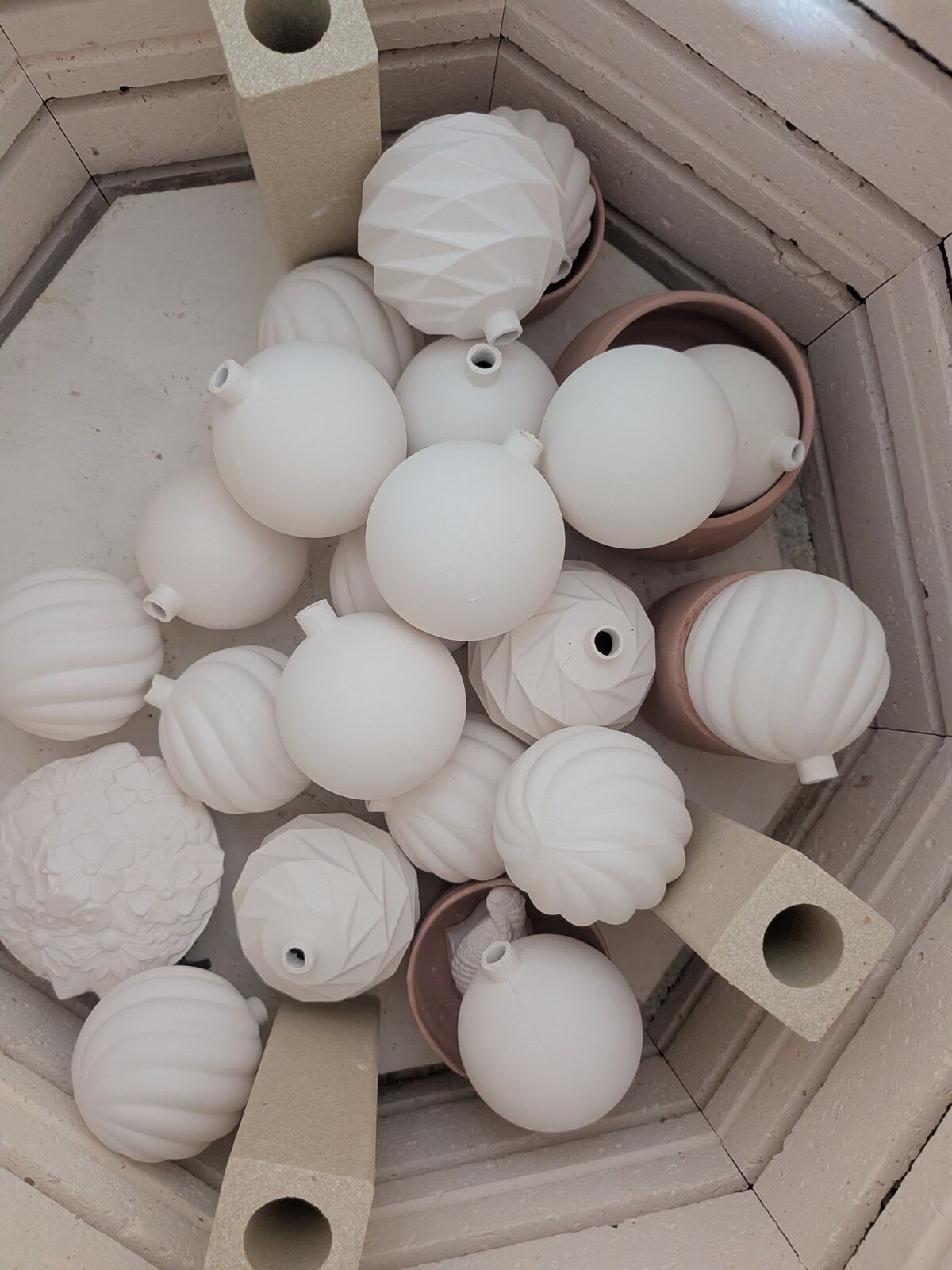
Pieces dry first, and they dry at their own pace rather than on a schedule. Trimmings come off, and any thin spots or flaws get handled before the piece goes near the kiln.
Then the bisque firing. This is the first time the clay sees real heat, and it comes out still porous, which is what lets glaze sit on it later.
4. Glazing, then the glaze firing
Glaze goes on after the bisque, usually dipped, sometimes brushed where a piece needs more control. Some decoration here is wax resist, laid down before the glaze so it resists.
The second firing is where the glaze actually melts and becomes the surface you see. It is also where things can go wrong, and where a lot of the variation between pieces comes from.